Key takeaways
- Outdoor heat is context, not a diagnosis of an indoor defect.
- Shade, envelope, equipment, and occupant reports should be reviewed as separate evidence.
- A repeatable review needs a defined escalation point and a limitation note.
Source record
4 cited sources
Last verified
2026-08-20
Table of Contents
August 27, 2026
Research question
When residents report that a rental unit is unusually hot, how can an owner determine whether the record points to seasonal weather, solar exposure, a building-envelope condition, equipment performance, or an incomplete observation? The answer cannot come from an outdoor temperature alone. A useful review connects climate context to the unit, system, timing, and condition evidence without turning a correlation into a repair diagnosis.
This brief focuses on portfolio review design. It does not set an indoor temperature guarantee, diagnose HVAC equipment, or provide engineering, health, legal, or code advice.
Evidence scope and methodology
The research uses public material from the National Oceanic and Atmospheric Administration, the Department of Energy, the Environmental Protection Agency, and the Federal Emergency Management Agency. NOAA supplies climate and weather context. DOE discusses building energy and heat transfer. EPA addresses indoor air and moisture topics. FEMA provides building resilience material. None of these sources can diagnose a particular rental unit.
The proposed method compares a resident report, outdoor conditions, unit orientation and shade context, system status, maintenance history, and an authorized observation. It records what each source can support and what it cannot. The review is qualitative and does not estimate savings, comfort, or defect prevalence across a market.
Start with the report
The first record should preserve the resident’s words or a faithful, privacy-conscious summary, the date and time, rooms involved, duration, and any stated operating condition. “Bedroom feels hot after sunset” differs from “whole unit is hot all afternoon.” “Thermostat reads 78” is a different fact from “air conditioner is broken.” Keeping those claims separate prevents the first note from becoming an untested conclusion.
The record should also show what the resident was asked to check, if anything, under an approved procedure. Operators should not ask residents to open equipment, bypass controls, or perform unsafe tests. If a professional inspection is needed, that should be a distinct handoff.
Climate context
NOAA climate normals describe long-run averages for specific locations and periods. They are useful context for comparing a report with typical conditions, but they do not describe the actual weather during a particular afternoon. NOAA observations or an appropriate local station may provide event context, subject to station location and measurement limits.
The correct interpretation is modest: “The report occurred during a period of elevated outdoor heat in the selected record.” It is not: “The heat explains the complaint.” A manager should preserve the station, dates, variables, and retrieval date so another reviewer can understand the comparison.
Building and shade evidence
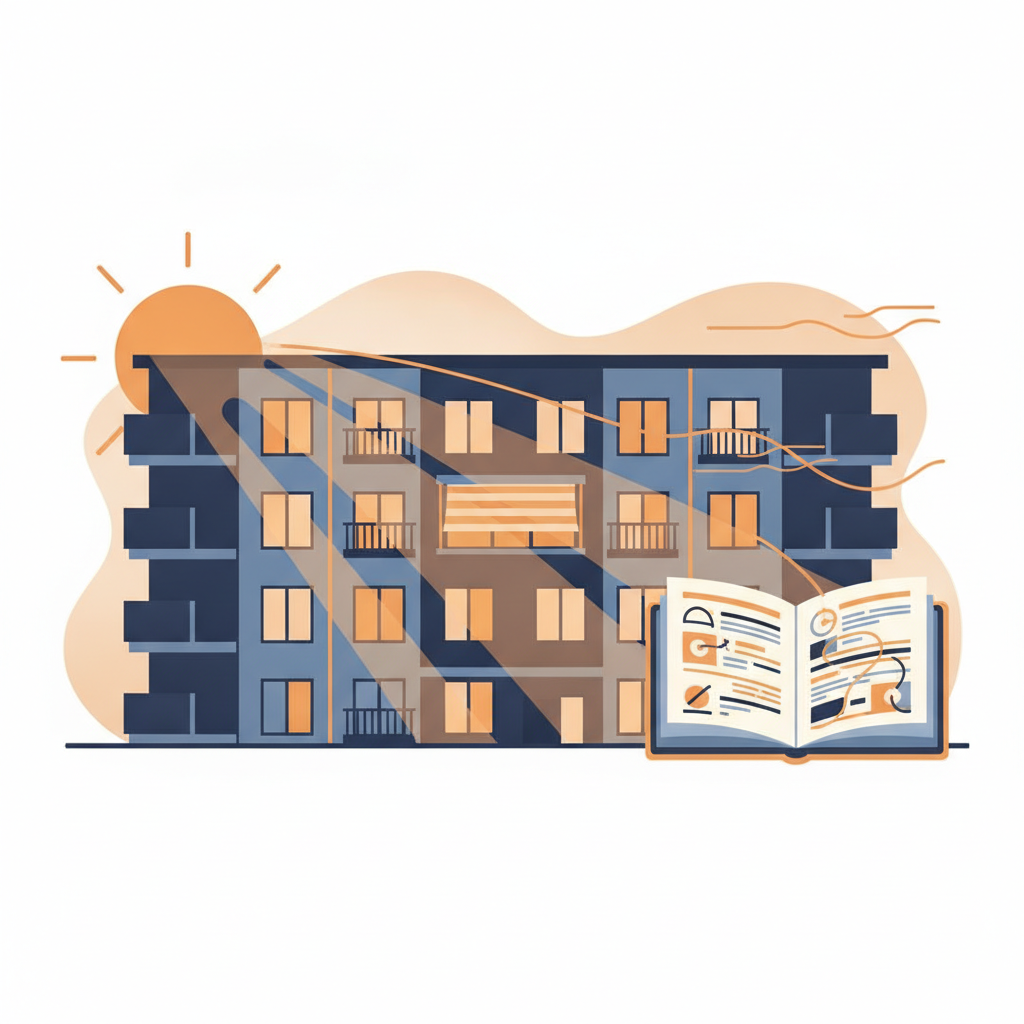
Solar exposure can differ by orientation, tree cover, neighboring structures, blinds, exterior shade, and season. DOE’s building guidance supports examining the envelope and solar gains as part of an energy review, but a public explanation is not an inspection report. A portfolio record can note observable shade conditions and changes, then route suspected envelope or equipment issues to an authorized professional.
Avoid using a generic property label such as “south-facing” as the whole explanation. Units, windows, floors, and nearby obstructions can differ. If a shade device is damaged, record the condition, location, date, and source. Do not infer that it caused indoor discomfort until the relevant system and conditions are reviewed.
Equipment and moisture boundaries
An air-conditioning complaint may involve settings, filters, airflow, controls, equipment, envelope, or demand. A maintenance queue can track the symptom and authorized checks, but should not represent an unqualified guess as a diagnosis. EPA’s indoor-air resources also show why moisture and ventilation concerns need careful treatment. A hot room and a moisture problem may coexist, but one does not establish the other.
The decision record should show whether the item was accepted as an operating condition, routed for inspection, held for more evidence, or escalated because of a safety or habitability concern. Local requirements and professional advice control the response.
Reading repeat reports
Repeated reports can reveal a pattern, but the pattern needs a denominator and consistent definitions. Count units and reporting periods, not just messages. Separate repeat reports in the same room from reports across a building. Note whether a repair, weather event, shade change, or occupant transition occurred between reports. A lower number after a repair may be encouraging, but the record cannot prove causation without a suitable evaluation.
Reviewers should distinguish missing records from normal conditions. A quiet period may mean comfort improved, or it may mean residents used another channel. This is why queue data should be checked against the approved communication and maintenance records when such comparison is authorized.
Limitations
Weather stations may not match a property. Climate normals are not forecasts or indoor measurements. Public building guidance does not account for every construction type, lease, system, or local rule. Resident reports are important evidence but are not instrumentation. The method cannot establish code compliance, medical impact, or equipment failure. Those questions require the appropriate qualified reviewer.
Conclusion
The evidence-led answer is to treat solar heat as context and to test it against unit-specific observations, system records, and authorized maintenance evidence. A disciplined rental portfolio file preserves the report, climate source, shade condition, system status, decision, and uncertainty. That gives an owner a better basis for routing work while avoiding the unsupported claim that weather, a resident, or one building feature caused the problem.